


How Long Does Leather Really Last? (Real vs Synthetic Test)

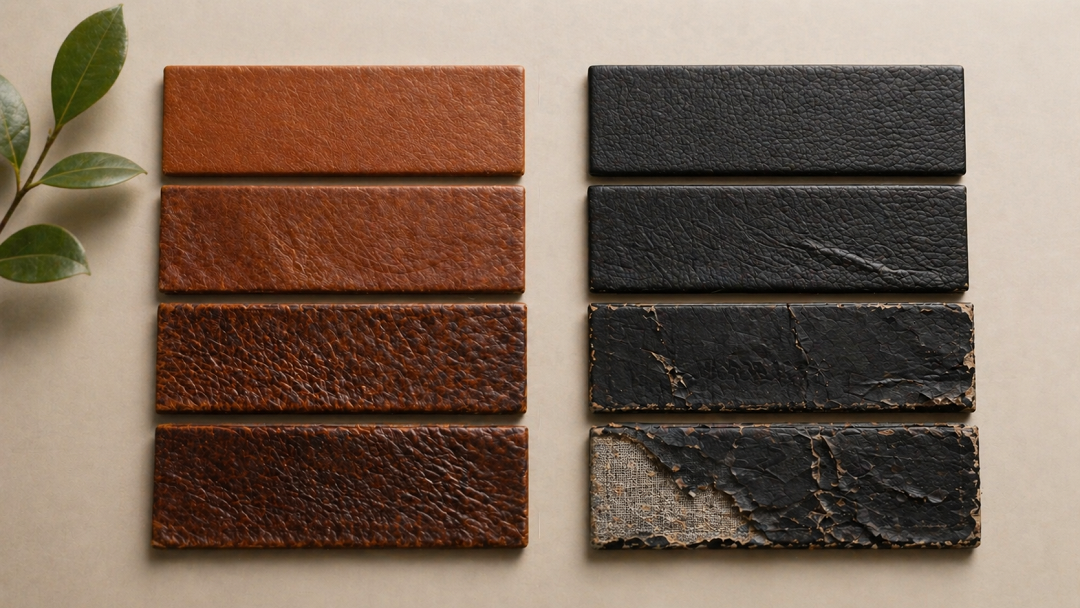
When investing in daily essentials, one key question always arises: how long will this item actually last? When evaluating leather items, longevity isn’t just measured in months or years. It is about how the material ages over time and retains its structural integrity. This process of aging is precisely where genuine leather and synthetic alternatives diverge.
What durability really means
Durability encompasses far more than simple resistance to everyday surface damage. It reflects how a material responds to constant use, flexibility, and environmental exposure.
Genuine full-grain and top-grain leather do not simply wear out over time. Instead, high-quality leather develops a natural patina, acquiring unique character and enhancing its overall appearance with age. Conversely, synthetic alternatives—often made from polyurethane (PU) or polyvinyl chloride (PVC)—do not evolve gracefully. Rather than developing character, synthetic material gradually degrades.
Timeline comparison: Real leather vs synthetic
To understand the long-term value of your purchase, consider how both materials perform over an extended period:
-
First few months: Both materials look strikingly similar upon purchase. Synthetic options may even appear more uniform in color and texture initially.
-
After 1 year: Genuine leather softens, molds to your usage patterns, and begins developing its distinct patina. Synthetic items start showing visible signs of friction wear, particularly around high-stress seams and fold lines.
-
After 3 years: Real leather reaches its aesthetic peak, showing rich tones and outstanding flexibility. Synthetic products often suffer from surface cracking or peeling as the top plastic layer separates from its fabric base.
-
After 5+ years: A well-crafted leather product remains fully functional and visually appealing with basic care. Most synthetic items have long reached the end of their lifespan and been replaced.
Why synthetic leather cracks and peels
Synthetic leather is essentially a plastic coating bonded to a fabric backing layer. Over time, sunlight, temperature shifts, and natural movement cause this plastic layer to lose flexibility, leading to irreversible cracking. Proper care makes a significant difference for real leather.
Choosing authentic craftsmanship ensures long-lasting quality. For more information on leather manufacturing standards.