


How to Tell Genuine Leather from Synthetic Leather

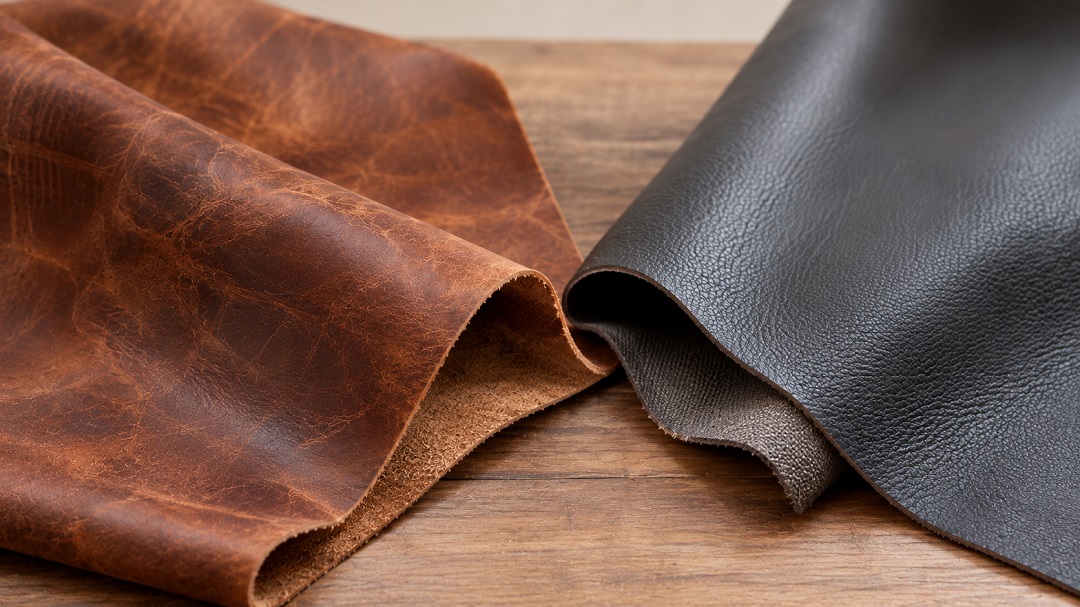
Genuine leather and synthetic leather can look quite similar at first glance, especially when synthetic materials feature embossed surfaces designed to imitate natural leather grain. However, they are different materials with different origins, structures and characteristics.
The most reliable way to identify whether a material is genuine or synthetic leather is to examine its origin, surface, backing and structure. Product labels and supplier specifications remain the most important sources of information, as no single visual characteristic provides absolute proof.
In this guide, we explore the main differences between the two materials, what to look for before buying and which identification methods are genuinely useful.
What Is Genuine Leather?
Genuine leather is made from processed animal hides and skins, including bovine, sheep, lamb and goat skins. Through tanning, the material gains the properties needed for use in clothing, footwear, bags, accessories and decorative products.
One of its defining characteristics is its natural fibrous structure. Its surface may show small variations, natural markings and irregularities because each hide comes from a different animal and has its own characteristics.
Depending on its processing and finish, genuine leather can be smooth, matte, glossy, embossed, suede or nubuck. There is therefore no single appearance that defines all genuine leather.
What Is Synthetic Leather?
Synthetic leather is a man-made material designed to imitate the appearance and, in some cases, the feel of genuine leather.
The two most common categories are:
PU Leather (Polyurethane): Usually made with a polyurethane surface coating applied over a textile backing. It can be produced in different textures, colours and finishes, including embossed patterns that resemble natural leather.
PVC Leather (Polyvinyl Chloride): Uses polyvinyl chloride as the main material in its synthetic coating. It can also be manufactured in a wide range of colours and textures to imitate leather.
There is also bonded leather, sometimes called reconstituted leather. It is made from leather fibres or scraps that are bonded together with binding materials and usually receive a new surface finish. It is not the same as a continuous piece of genuine leather, but it is also different from a fully synthetic material.
5 Ways to Tell Genuine Leather from Synthetic Leather
1. Examine the Natural Grain and Surface
One of the first things to examine is the surface texture.
Genuine leather may have small variations in its grain pattern, depth and distribution. You may also notice minor markings or differences in texture from one area to another.
Many synthetic leathers, on the other hand, have a more repetitive and uniform embossed pattern. The grain may repeat in a similar way across the surface because it has been artificially created.
However, this is not a definitive test. Genuine leather can be sanded, embossed or heavily finished, while modern synthetic materials can imitate natural grain with impressive accuracy.
2. Check the Backing
The reverse side is one of the most useful areas to examine.
On genuine leather, the underside often has a fibrous, fuzzy or suede-like appearance, depending on the type of leather and its processing.
Synthetic leather usually has a textile backing, knitted substrate or another manufactured structure. It may show a regular weave or texture that looks noticeably different from the surface.
There are exceptions, however. Some genuine leathers have a lining or special treatment on the reverse side, while certain synthetic materials use backings that resemble natural fibres.
3. Observe How the Material Folds
Another useful indication is how the material behaves when gently bent or folded.
Genuine leather responds according to its natural fibrous structure. Depending on its thickness and finish, it may develop natural creases and subtle surface variations.
Synthetic materials can behave differently. In some cases, the surface coating creates more uniform folds or may show signs of stress.
This test should always be performed carefully, without excessive pulling or folding, especially when examining a sample that belongs to someone else or is intended for a specific project.
4. Consider the Smell and Feel
Genuine leather usually has a characteristic smell, which can be influenced by the tanning process, finishing products and surface treatment.
Synthetic materials may have a different smell, sometimes resembling plastic or a chemical coating. However, smell is not a reliable identification method because both genuine and synthetic materials can have different odours depending on how they are manufactured.
The same applies to touch. Genuine leather can be soft, firm, flexible or relatively stiff. A high-quality synthetic material can also have a smooth and pleasant surface.
Smell and feel can provide useful clues, but they are not proof of authenticity.
5. Check the Product Description and Material Origin
When buying leather online or from a supplier, one of the most important steps is to check exactly what the product description says.
Look for information about:
- The material’s origin and type.
- The animal species, if it is genuine leather.
- The tanning process and surface finish.
- Thickness and technical specifications.
- Any textile or synthetic backing.
Terms such as PU, PVC, polyurethane, synthetic leather, faux leather and leatherette generally refer to synthetic or imitation materials. Descriptions that identify a specific animal hide and its processing provide clearer information about the material’s origin.
If the product description is unclear, ask the supplier for clarification before purchasing.
Is Genuine Leather Always Better Than Synthetic Leather?
There is no single answer that applies to every situation. Both materials have different characteristics and can meet different needs.
Genuine leather has a natural fibrous structure, distinctive texture and the ability to develop a different appearance through use, depending on its type and finish. Its durability depends on quality, processing, thickness and the way it is used.
Synthetic leather offers a wide variety of colours and patterns. It can provide a more uniform appearance and may have a different purchase cost. Its performance depends on its composition, coating quality and backing material.
The right choice depends on the intended application, the desired result and the requirements of the project.
Can Synthetic Leather Look Exactly Like Genuine Leather?
Synthetic material manufacturing has developed significantly. Today, some materials feature embossed patterns, tonal variations and soft surfaces that can closely imitate the appearance of genuine leather.
Some even have artificially created grain patterns designed to resemble specific types of leather, including smooth, textured and crocodile-effect finishes.
This means that visual inspection alone is not always enough. When certainty is important, product documentation or professional examination of the material’s structure is a much more reliable approach.
Conclusion
Genuine and synthetic leather may look similar, but they differ in origin, structure and characteristics. Surface texture, backing, folding behaviour and feel can provide useful indications, but none of these features alone is enough to guarantee accurate identification.
Before choosing a material, check the product description, request clear information about its composition and consider the application for which you intend to use it. This will help you make a more informed decision and select the material that genuinely meets your project’s needs.
At Leathermio, you can explore different types of genuine leather, textures and colours for your next creative project.
Frequently Asked Questions
1. How can I tell whether leather is genuine or synthetic?
Examine the surface, backing, structure and product description. The most reliable confirmation comes from supplier specifications or professional material testing.
2. Does genuine leather always have imperfections on its surface?
Not necessarily. It may have natural markings and variations, but processing and finishing can create a more uniform appearance.
3. Is PU leather genuine leather?
No. PU leather is a synthetic material with a polyurethane coating, usually applied over a textile backing. It imitates the appearance of genuine leather but does not have the same origin or structure.
4. Is synthetic leather the same as bonded leather?
No. Synthetic leather is mainly manufactured from artificial materials such as PU or PVC. Bonded leather contains fibres or scraps of genuine leather that are bonded with other materials and given a new surface finish.